The Insider's Secret to Acing Technical Interviews
Feb 04, 2024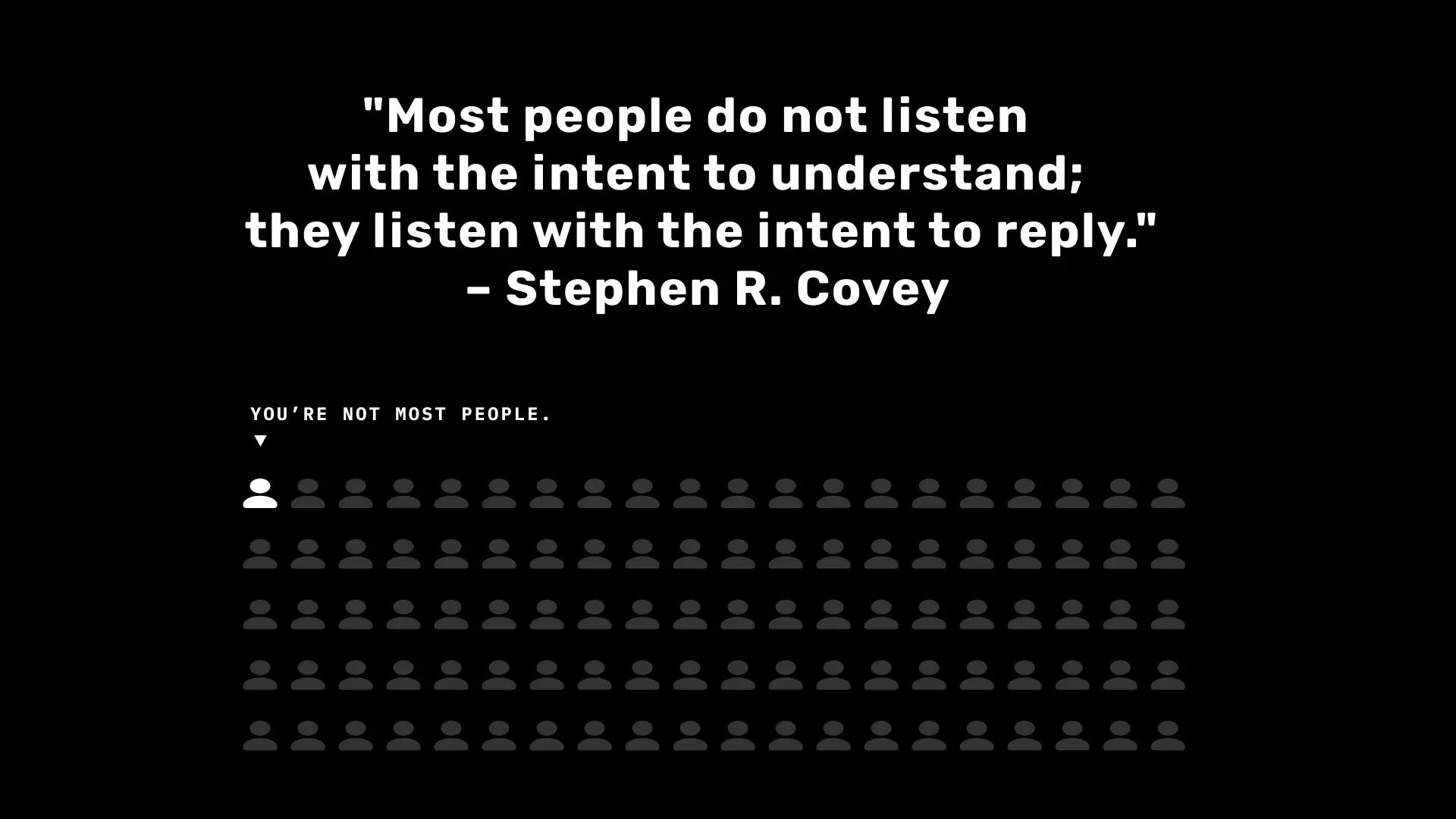
I have watched two engineers with near-identical skills walk out of the same technical interview with opposite outcomes. One got the offer. The other did not. The gap was not the code. It was that one of them was actually listening, and the other was just waiting to talk.
That is the part candidates underrate. You prepare for a technical interview by grinding algorithms and brushing up your stack, which you should. But the thing that quietly separates a pass from a fail at the same skill level is not raw coding speed. It is whether you treat the interview as a conversation or a quiz.
Here is what I mean, and how to use it.
A technical interview is a communication test wearing a coding problem
When an interviewer hands you a problem, they are watching far more than whether you reach the answer. They are watching how you think. Do you understand what was actually asked. Do you check before you assume. Can you take someone through your reasoning. In real engineering, the person who charges off and builds the wrong thing confidently is a liability. The interview is built to surface that, and listening is how you prove you are not it.
So the skill to sharpen is not just solving. It is listening well enough that you solve the right problem, out loud, with the interviewer alongside you.
Six things that show you are listening
Clarify before you code. Ask the follow-up questions. What are the input sizes. What happens at the edges. Is this optimising for speed or memory. It is not a sign of weakness. It is the first thing a senior engineer does, and interviewers know it.
Play the problem back. Before you dive in, restate it in your own words. "So I am being asked to do X, given Y, and the constraint is Z." Thirty seconds that catch a misread before it costs you the whole question.
Think out loud. Silence is the enemy. Narrate your reasoning as you go, including the approach you are rejecting and why. If you go quiet for two minutes and write the wrong thing, the interviewer learned nothing useful about you. If you talk through it, they see how you reason even when the final code is not perfect.
Take notes. Jot the key constraints and requirements as they are said. It keeps you anchored to what was actually asked instead of the slightly different problem that drifts into your head.
Use the room, even on Zoom. Nods, eye contact, the small signals that you are present. A technical interview is still two humans deciding whether they want to work together.
Ask for a read, then adjust. After you propose an approach, check in. "Does that direction make sense before I build it out?" It shows you can take input and course-correct, which is most of what the job actually is.
Why this is the edge
Two candidates solve the same problem. One did it in silence and handed over working code. The other clarified the ambiguity, talked through the trade-offs, caught their own mistake out loud, and checked in before committing. Both reached the answer. Only one showed the interviewer what it is like to work with them.
That is the insider's secret. The code proves you can do the job. The listening proves you would be good to do it with. Bring both, and you stop being the candidate who was technically fine but somehow did not get the call.
Stay Sharp Between Applications
Join 1,000+ ambitious tech pros and get one practical, recruiter-backed career tip every Sunday to help you land interviews, negotiate offers, and grow in your role.
No fluff. No spam. Just real advice from inside the hiring room.
We hate SPAM. We will never sell your information, for any reason.